

Laundry is not complicated. The logistics around laundry often are.
In many apartment buildings, the difference between an in-home washer and dryer and a shared laundry room is not just convenience. It is time control. It is predictability. It is hygiene. It is noise management. It is even budgeting, because small recurring costs add up fast.
This is a practical breakdown of why in-home laundry consistently outperforms shared machines, especially for renters who value routine, privacy, and reliability.

The Real Cost of Shared Laundry Is Not the Coins
Shared laundry looks cheaper on paper. The machines are not inside your unit, so it feels like you are not paying for them. But the hidden costs show up every week.
Shared laundry costs you:
- Time spent waiting for machines to free up.
- Extra trips in hallways, elevators, and parking areas.
- Extra planning to avoid peak hours.
- Missed windows when a cycle ends and someone moves your load.
- Repeat washes when a machine does not rinse well.
- Stress when the room is closed, occupied, or messy.
Even in “well-managed” buildings, shared laundry is a shared system. Shared systems introduce friction. Friction is the real expense.
In-home laundry removes that friction. You start a load when you want. You move it when you want. You finish when it fits your schedule, not the building’s.
For those considering renting options with in-home laundry facilities in places like Quantico, it’s worth exploring short-term rental accommodations that offer this convenience.
Time Control: Laundry Should Fit Your Day, Not Replace It
With shared laundry, your day gets built around the machines. You check availability, guess when neighbors will be done, set timers and still end up waiting.
In-home laundry flips the model. Laundry becomes a background task.
This is what time control looks like with in-home machines:
- Start a load before work and dry it after dinner.
- Wash towels while you clean.
- Run small loads more often instead of stockpiling.
- Handle a spill or emergency outfit in minutes.
This matters more than most people expect. Laundry is not one event; it is a recurring logistics loop. A small improvement each week becomes a big quality of life upgrade over a lease term.
Reliability: Shared Machines Break More Than You Think
A shared washer is used far more than an in-home unit. That increases wear and also increases misuse.
Common shared laundry issues include:
- Machines that do not drain fully.
- Weak spin cycles that leave clothes damp.
- Dryer sensors that stop early.
- Lint clogs that slow drying.
- Detergent residue from previous users.
- Payment systems that fail mid-cycle.
When a shared machine fails, you do not have a backup. You have a delay. You may have to carry wet laundry back to your unit or even rewash.
With in-home laundry, you control the environment and usage. If a unit has a maintenance issue, you can report it immediately and manage laundry in the meantime in smaller, controlled loads. More importantly, you avoid the “random failure” factor that comes from dozens of households using the same equipment.
This level of convenience and reliability is just one of the many benefits of staying at Quantico Short Term Rentals, where in-home laundry facilities are part of the package.
Hygiene and Handling: Clean Clothes Should Not Depend on a Public Room
Laundry is personal. It includes underwear, bedding, towels, gym clothes, uniforms, and items that touch skin daily. A shared laundry room is a public space with unknown handling.
Even if you trust your neighbors, you cannot control:
- What was washed before your load.
- Whether someone used excessive fabric softener or bleach.
- Whether the machine was wiped down.
- Whether a pet bed, mop head, or heavily soiled item ran right before your cycle.
- Whether the folding surface is actually clean.
In-home laundry gives you consistent standards.
- You know what goes into the machine.
- You can clean the drum on your schedule.
- You can keep detergent choices consistent.
- You can dry and fold immediately, in a clean space.
The benefit is not theoretical. It is measurable in fewer rewashes, better fabric care, and fewer “mystery odors” that come from shared equipment.
Privacy: No Hallway Trips, No Public Exposure, No Awkward Timing
Shared laundry requires public movement. That means carrying baskets through common areas, using elevators, crossing parking lots, or navigating basement corridors.
This creates privacy issues that people rarely talk about directly.
- Clothing sizes and personal items are visible.
- Schedules become predictable.
- Late-night laundry can feel unsafe in isolated rooms.
- Some people avoid laundry at certain hours because the space feels uncomfortable.
In-home laundry removes those concerns. You can do laundry early, late, or in between. You do not have to make yourself visible to complete a basic household task.
Noise and Comfort: Shared Laundry Noise Travels, Too
One argument for shared laundry is that it keeps machine noise out of the unit. In practice, shared laundry noise rarely disappears.
In many buildings:
- Laundry rooms sit near bedrooms or living areas for some units.
- Vibration transfers through floors and walls.
- Doors slam, conversations happen, carts roll, and timers beep.
In-home machines, especially modern units, are quieter than many people remember. Proper installation, balanced loads, and basic vibration pads can keep noise low. And even if you hear your own machine, it is predictable and within your control.
The key difference is control. Shared noise is random. In-home noise is manageable.

Micro-Loads vs Mega-Hauls: The Convenience of Smaller Cycles
Shared laundry pushes people into “laundry day.” That means larger loads, more hauling, more folding at once, and more pressure to finish quickly so you are not taking up machines.
In-home laundry supports micro-loads.
- Wash a small load of workout clothes.
- Run towels mid-week.
- Refresh bedding without planning a full day around it.
- Separate delicates without needing multiple trips.
Smaller loads can also be better for fabric care. Clothes move more freely. Detergent rinses more effectively. Drying is faster. Wrinkles are reduced because clothing is not sitting in a communal machine waiting to be picked up.
The Real Competition: In-Home vs “Almost In-Home”
Some buildings promote “laundry on every floor” or “laundry near the elevator” as a middle ground. While that is better than a basement laundry room, it still involves sharing.
The remaining problems do not go away:
- Machine availability is still unpredictable.
- Handling is still public.
- Payment systems still exist.
- Cleanliness standards still depend on everyone.
Proximity helps. However, it does not solve shared logistics.
In-home laundry eliminates the system, not just the distance. For instance, this spacious 4300 sq ft home near Quantico offers such an advantage with its in-home laundry facilities.
Financial Predictability: Fewer Surprise Costs Over a Lease Term
Shared laundry often comes with per-load fees. Even when they seem small, they accumulate.
Typical cost drivers include:
- Per-wash and per-dry pricing.
- Premium pricing for larger machines.
- App fees or minimum top-ups.
- Extra drying cycles because dryers run cooler.
- Rewashes caused by machine issues or residue.
In-home laundry shifts costs into utilities, but it gives you control.
- You choose cycle type and duration.
- You can air dry items easily at home.
- You can run off-peak cycles when possible.
- You can optimize loads to reduce dry time.
The bigger value is predictability. A predictable household budget is a practical advantage, especially when rent and utilities already fluctuate.
If you’re considering a rental property that offers in-home laundry for financial predictability, these tiny homes provide an excellent option.
Clothing Longevity: Better Care Comes From Better Control
Shared machines are designed for durability, not delicate care. They are used heavily, sometimes harshly, and sometimes incorrectly.
In-home machines allow:
- Gentle cycles that you trust.
- Proper sorting without time pressure.
- Immediate removal from the washer to reduce mildew odor.
- Lower heat drying to protect elastic, denim, and activewear.
Over time, better laundry care reduces replacement costs. Clothes last longer. Bedding stays softer. Towels keep absorbency longer because you can avoid over-softening and residue buildup.
If you’re interested in experiencing the benefits of in-home laundry first-hand, consider staying at one of these tiny homes which come equipped with such facilities.
The Logistics of Families, Roommates, and Hybrid Work
Shared laundry is hardest when more than one person depends on it.
Families deal with constant laundry volume. That means more trips, more time blocks, and more scheduling stress.
Roommates face conflicts. People forget loads. People take too long with machines. The shared laundry room becomes another shared resource to manage, like kitchen space, but with less visibility and more urgency.
Hybrid and remote workers notice the time cost more. When you are home, you want household tasks to be efficient. In-home laundry fits naturally into breaks between calls. Shared laundry interrupts the day with travel and waiting.
In-home laundry scales better. More people does not mean more conflict. It just means more loads, handled privately.
For those considering a transition to in-home laundry solutions, exploring options such as tiny homes or similar accommodations could be beneficial. These spaces often come with the convenience of in-home laundry facilities that can significantly ease the burden of shared laundry logistics.
Safety and Security: A Small Detail With a Big Impact
Laundry rooms can create security issues.
- Propped doors.
- Unlocked basements.
- Strangers entering behind residents.
- Poor lighting.
- Isolated hallways.
Even in secure buildings, laundry rooms are one of the few places residents go alone, often at off-hours, and often while distracted.
In-home laundry reduces exposure. Fewer trips into shared, semi-public spaces is a practical safety benefit, especially at night.
Common Concerns About In-Home Laundry (And the Practical Reality)
“In-home machines mean more maintenance.”
Any appliance can need maintenance. The practical difference is response time and control. You can report issues immediately. You can also prevent many problems with basic habits like not overloading and cleaning the lint filter.
“In-home laundry uses more water and electricity.”
Modern machines are efficient. Many use load-sensing technology and optimized spin cycles that reduce drying time. The bigger variable is behavior. In-home laundry lets you choose eco cycles and avoid redundant rewashes.
“Shared laundry keeps my unit quieter and cooler.”
This depends on the building and the machine type. Many in-home setups are vented properly or use ventless heat pump systems designed for apartments. Noise is also lower with newer models, especially stacked front-load units.
“I do not have enough space.”
Many apartments use compact, stacked units in a closet or alcove. The footprint is small. The benefit is constant, weekly convenience.
What to Look For in an Apartment With In-Home Laundry
Not all in-home setups are equal. If you are comparing units, check these details.
Washer and dryer type
- Front-load stacked units are common in apartments.
- Ventless dryers can be efficient, but drying time depends on model.
- Heat pump dryers are typically more energy-efficient.
Capacity
- Compact units are fine for one to two people.
- Larger capacity matters for bedding and towels.
Ventilation
- If vented, confirm the exhaust is properly installed.
- If ventless, confirm adequate airflow in the closet area.
Drain pan and shutoff access
- Good installations reduce leak risk.
- Easy shutoff access is a practical plus.
Location inside the unit
- A laundry closet near bedrooms can be convenient.
- A location near living space can be fine if the machine is quiet.
These technical points directly affect daily convenience. The best in-home laundry setups feel invisible because they work consistently.
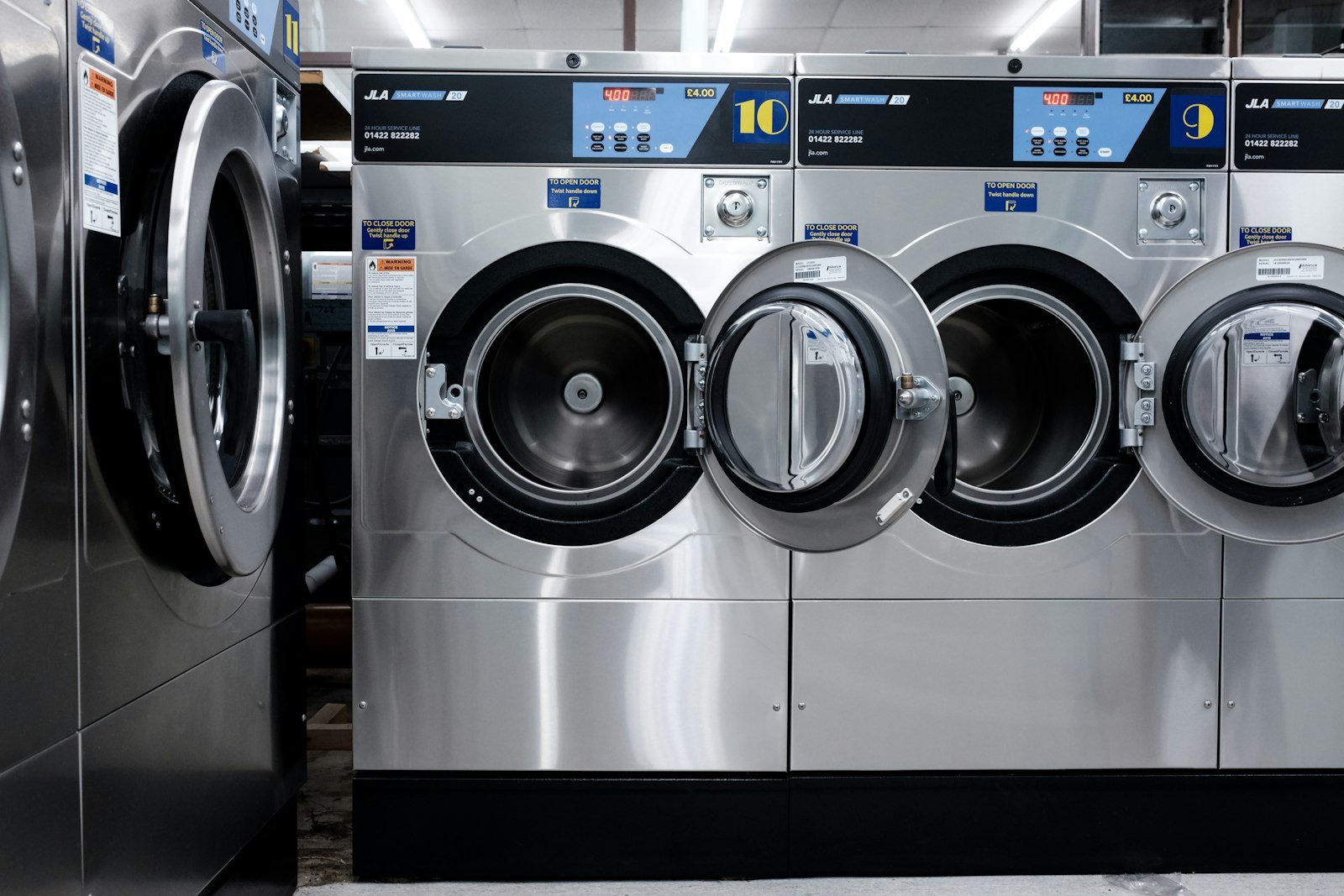
Shared Laundry Can Work, But It Still Adds Friction
Shared laundry is not always a deal-breaker. Some buildings manage it well. Some renters have schedules that avoid peak times. Some people simply do not mind the routine.
But from a logistics perspective, shared laundry always introduces:
- More steps.
- More uncertainty.
- More public exposure.
- More reliance on other people’s behavior.
In-home laundry is not just a luxury feature. It is a system upgrade. It reduces steps. It reduces uncertainty. It increases control.
That is why it consistently wins in real life, not just in marketing language.
Bottom Line: In-Home Laundry Is a Practical Advantage You Feel Every Week
Laundry happens continuously. That is why the best setup is the one that reduces friction every time you use it.
In-home laundry delivers the benefits that matter most:
- Predictable access.
- Faster completion.
- Cleaner handling.
- Better privacy.
- Better clothing care.
- Fewer trips and fewer interruptions.
If you are choosing between two otherwise similar apartments, in-home laundry is one of the few features that improves day-to-day life immediately. It saves time. It reduces stress. It keeps your schedule in your hands.
That is what good laundry logistics looks like.
FAQs (Frequently Asked Questions)
Why does in-home laundry outperform shared laundry machines in apartment buildings?
In-home laundry outperforms shared machines because it offers greater time control, predictability, hygiene, noise management, and budgeting benefits. It eliminates the friction and hidden costs associated with shared laundry rooms, such as waiting times, extra trips, and scheduling conflicts.
What are the hidden costs of using shared laundry facilities?
Shared laundry facilities incur hidden costs like time spent waiting for machines, extra trips through hallways and elevators, planning around peak hours, missed cycle windows leading to moved loads, repeat washes due to poor rinsing, and stress from messy or occupied laundry rooms. These factors add up beyond just the coin-operated fees.
How does in-home laundry improve time management compared to shared laundry?
In-home laundry allows you to start and finish loads on your schedule without waiting or coordinating with others. You can run small loads frequently, handle emergencies quickly, and integrate laundry seamlessly into daily routines—unlike shared laundry where your day revolves around machine availability and timing.
What reliability issues are common with shared washers and dryers?
Shared machines often suffer from problems like incomplete draining, weak spin cycles leaving clothes damp, early stopping dryer sensors, lint clogs slowing drying times, detergent residue from previous users, and payment system failures mid-cycle. These issues cause delays and inconvenience since there is no immediate backup.
How does in-home laundry enhance hygiene compared to shared facilities?
In-home laundry provides consistent cleanliness standards—you control what goes into the machine, can clean the drum regularly, use preferred detergents consistently, and dry/fold clothes immediately in a clean space. This reduces rewashes, protects fabric care, and avoids odors linked to unknown handling in public shared machines.
What privacy advantages does in-home laundry offer over shared laundry rooms?
In-home laundry eliminates the need to carry personal clothing through public hallways or elevators, avoiding exposure of personal items and predictable schedules. It also removes safety concerns related to using isolated or late-night shared spaces. Laundry can be done privately anytime within your own unit.